01 May, 2026
Originally published on The Good Men Project
A quiet shift in our routine that I didn’t notice – until it started affecting everything
I used to end my day feeling like I got at least one thing right.
No matter how messy the day had been, bedtime was ours. I’d sit next to my child, open a book, and read. Sometimes with energy, sometimes half-asleep—but I showed up. It felt like a small win.
I genuinely believed that was enough.
And for a long time, it was.
But looking back now, I can see the shift started much earlier than I realized.
Not suddenly. Not dramatically. Just… quietly.
How It Slipped In
It started with small allowances.
“Watch this while I finish something.”
“Just five minutes—I’ll be right there.”
“Okay, today’s been a lot. Let’s not fight this.”
Nothing felt wrong in those moments. In fact, it felt helpful. Even necessary.
Evenings became smoother. Fewer arguments. Less resistance.
And when you’re tired, “easier” feels like the right choice.
So I didn’t question it.
I just adjusted.
When “Just One More” Became the Routine
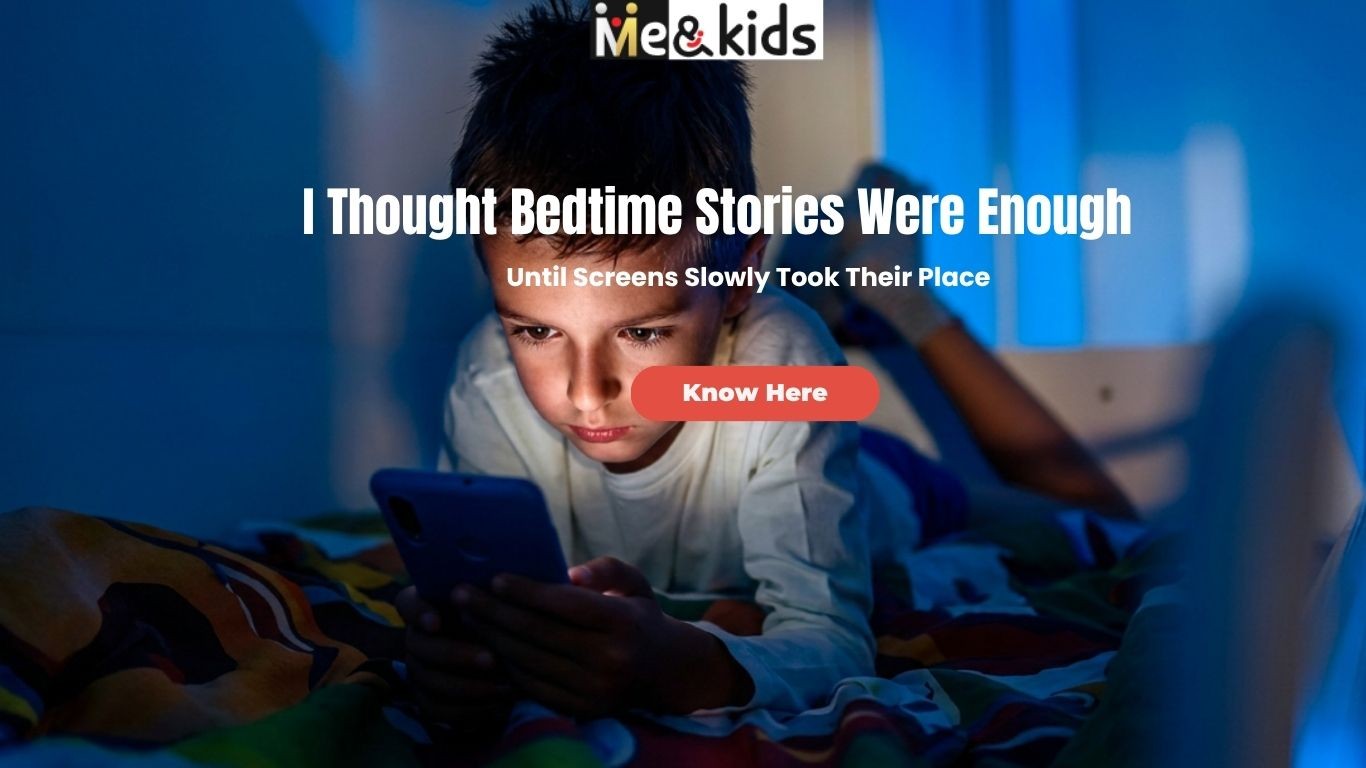
At some point, screens stopped being the exception and became part of the routine.
A video before brushing teeth. Another one before lying down. Sometimes one more after that.
And slowly, the bedtime story—the thing I thought mattered most—started shrinking.
Some nights we rushed through it. Some nights we skipped it.
I told myself it didn’t matter. That we’d do better tomorrow.
But tomorrow looked a lot like today.
The Part That Caught Up With Us
The real impact didn’t show up immediately.
It built up over time.
Bedtime started stretching longer. What used to take minutes turned into an hour of back-and-forth.
“I’m not sleepy.”
“Just one more video.”
“I’ll sleep after this.”
Mornings became harder too.
Waking up felt like a battle. Small things turned into big reactions. The overall mood just… shifted.
I kept looking for reasons outside of this.
Maybe it was school. Maybe it was a phase. Maybe I was overthinking it.
But deep down, I had a feeling I didn’t want to fully face.
The Moment It Clicked
One night, after repeating the same routine of delays and negotiations, it hit me.
The screen wasn’t helping bedtime.
It was replacing it.
And that realization wasn’t easy to sit with.
Because it meant I had a role in how things got here.
The Honest Part We Don’t Say Out Loud
I didn’t rely on screens because I didn’t care.
I relied on them because I was tired.
Because I had too much to juggle.
Because sometimes I just needed a moment to breathe without another demand.
Screens made things easier in the moment.
That’s the truth.
But they also slowly took over something that mattered more than I realized.
What I Changed (Without Turning Everything Upside Down)
I didn’t go extreme.
No sudden bans. No big declarations.
I knew that wouldn’t last.
Instead, I started small.
We Took Screens Out of Bedtime
Not completely out of our lives—just out of that specific part of the day.
At first, it didn’t go smoothly. There was pushback. There were complaints.
But I stayed consistent.
Not perfect—just consistent.
I Brought Back the Story—Properly
I stopped treating bedtime stories for kids like a task to finish.
I slowed down again.
Let my child choose the book. Even if it was the same one for the third night in a row.
We talked more. Laughed more. Took our time.
And slowly, it started to feel like “our time” again.
I Let Go of Perfect Nights
Some nights still don’t go as planned.
Some days are too long, too tiring.
And I’ve stopped expecting perfection from myself.
That shift alone made a big difference.
I Focused on What We Could Add
Instead of only removing screens, I added small things:
Talking about the day. Making up silly stories. Sitting in silence sometimes.
Nothing fancy.
Just being there.
What Changed After That
It wasn’t instant.
But it was noticeable.
Bedtime became less of a struggle.
Sleep came easier—most nights.
Mornings felt lighter again.
But more than anything, something else came back.
Connection.
That quiet feeling of ending the day together—not distracted, not rushed.
Just… there.
What I See Differently Now
I don’t think screens are the problem.
They’re part of how we live now.
The real question, at least for me, became:
What are they replacing?
Because that’s where the impact really shows.
If You’re Somewhere in This Too
If this sounds familiar, you’re not the only one.
This kind of shift happens without us noticing.
It doesn’t mean we’ve failed.
It just means life got busy, and we adapted the easiest way we could.
And maybe now, it’s just about noticing—and adjusting again.
Where I Landed
I still read bedtime stories.
Not perfectly. Not every night in the same way.
But intentionally.
And I pay more attention now—not just to what we’re doing, but to what might quietly take its place if I’m not careful.
Because sometimes, the smallest parts of our routine end up meaning the most.
And sometimes, getting them back doesn’t take a big change.
Just a small decision, repeated over time.